21 Smart Laundry Room Organization Small Space Ideas
Laundry room organization in a small space usually fails for one fixable reason. Most people buy bins before they measure anything. The bins never fit the gap between the machines. The shelf hangs too high to reach. The system falls apart by the second load.
It does not have to work that way. This exact search has broken out recently, with normalized search growth hitting 390 percent. Renters and small-home owners are solving this problem right now.
The 21 ideas in this laundry room organization small space guide fit real constraints: reach-in closets, hallway nooks, bathroom corners, and shared laundry rooms. You will find wall-mounted storage, slim rolling carts, and drying solutions that need no floor space. There is also a portable kit for buildings with no machines at all. Most ideas need no drilling.
Laundry Room Organization Small Space: What It Actually Means
Laundry room organization in a small space means every supply has a fixed home. That home sits on a wall, a door, or in the gap between machines, never on the floor.
Floor space is the one thing a small laundry area cannot spare. Treat the walls, the door back, and the inches around your machines as the storage plan. Nothing below needs a bigger room, and renters will find no-drill options flagged in each idea.
Edit Your Supplies Before You Buy A Single Bin
Organizing starts with owning less, not storing more. The golden rule of laundry room organization for small space projects: edit before you store. Professional organizer Shira Gill, author of Minimalista, put it this way when she spoke to Livingetc about small laundry rooms: “When I think about laundry, I ask, ‘What do you actually need to do the laundry functionally?'” You just need detergent, maybe some dryer balls, and a steam stick.”
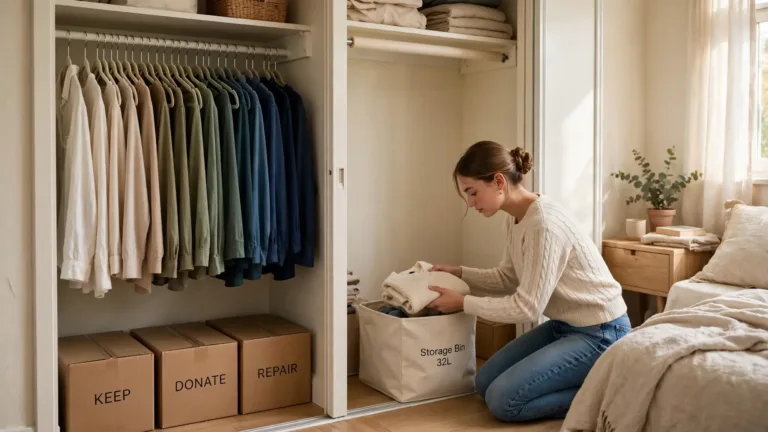
Pull everything out of your laundry corner and sort it fast. Keep the detergent you use, the stain remover that works, and the tools you reach for weekly. Donate or toss the half-used bottles, the third lint roller, and the specialty products you never touch. Most small laundry rooms feel twice as big after this edit alone.
Measure Every Inch Before You Spend A Dollar
Grab a tape measure before you shop. Record the gap width between the machines. Note the depth from the wall to the machine fronts. Measure the height to the lowest shelf or cabinet. Check the door swing clearance. Save all four numbers on your phone.
Laundry room organization in small spaces challenges all to share one fix: measure first. One bin that is an inch too wide ruins the whole row. Measure twice and buy once.
Best for: Closet laundry setups where every inch is spoken for.
Try this: Photograph your measurements and keep them in a phone note for store trips.

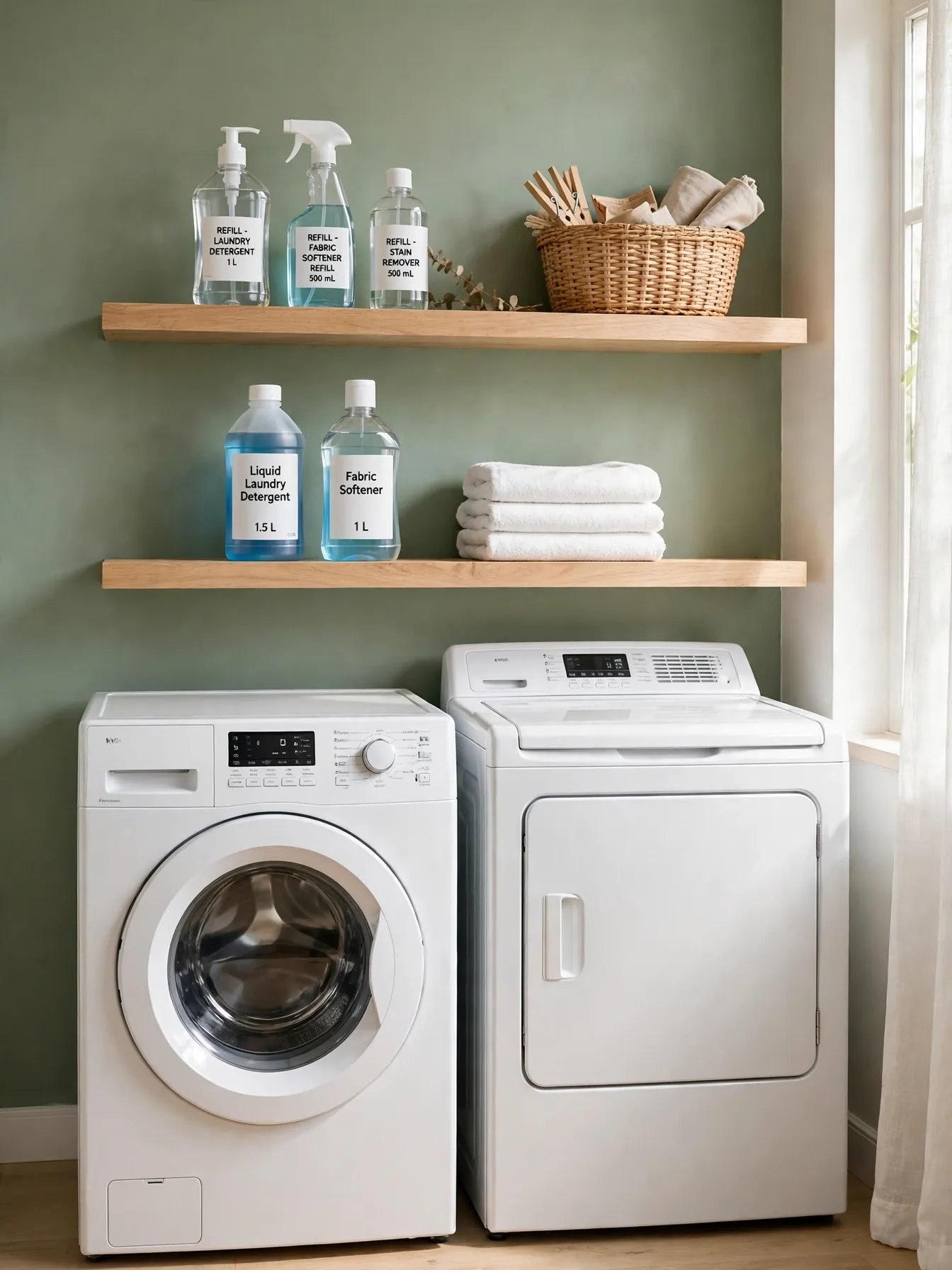
Float Two Shelves Above The Machines
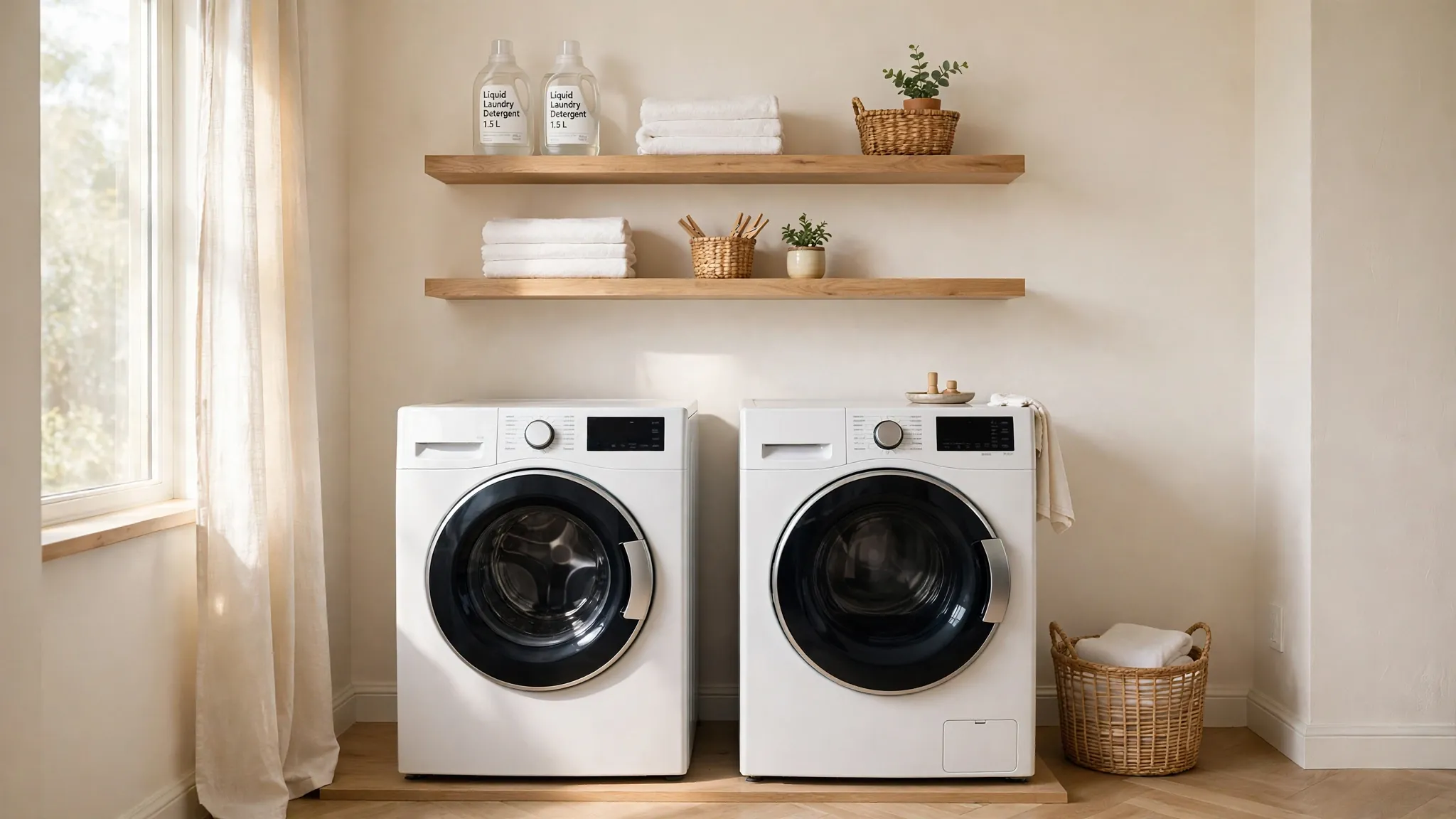
Two floating shelves above the washer and dryer hold the daily supplies at eye level. Keep detergent, dryer balls, and stain remover on the lower shelf. Reserve the upper shelf for refills and seasonal items.
Choose sturdy shelves with brackets rated for heavy bottles, since full detergent containers weigh several pounds. Mount into studs where you can. Renters can use heavy-duty adhesive shelf brackets rated for the load, but test one bracket first.
Best for: Side-by-side machines with blank wall space above.
Try this: Keep the lower shelf at a height you can reach without a step stool.
Mind The Gap With A Slim Rolling Cart
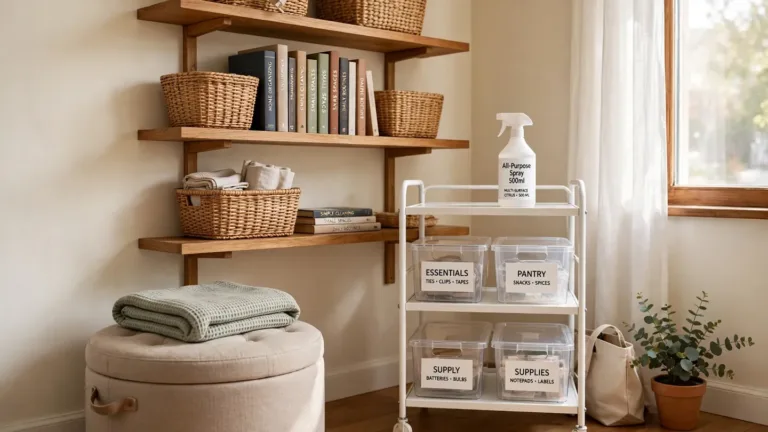
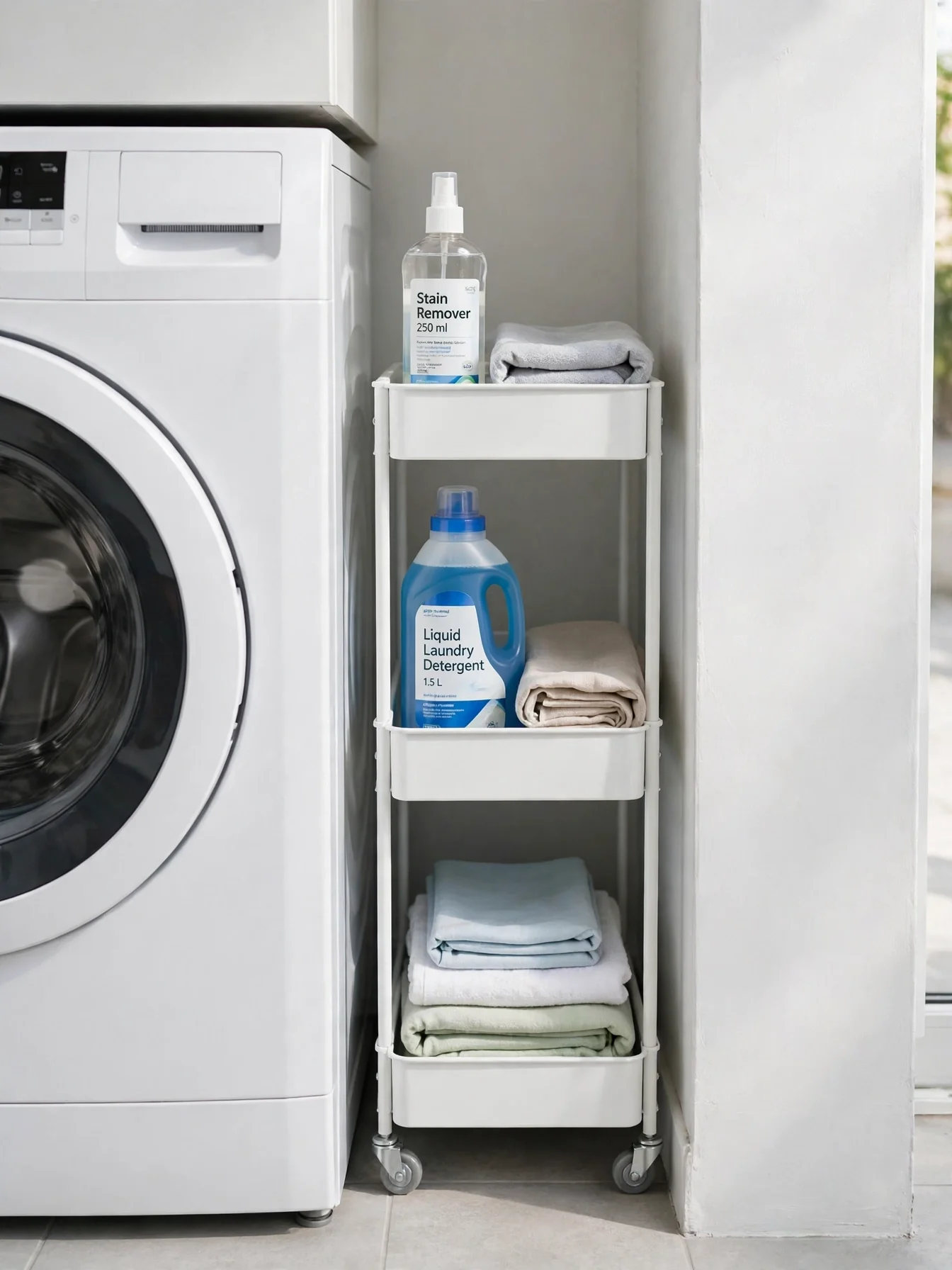
The inches between the washer and the wall are dead space in most laundry rooms. A slim rolling cart turns that gap into three or four tiers of storage. Roll it out to grab the stain remover, then slide it back.
Look for raised edges on each tier so bottles stay put when you move it. Locking wheels keep it steady while you pour. Measure the gap first, since carts come in several narrow widths.
Best for: Narrow gaps beside front-load machines.
Try this: Store the items you grab every load on the top tier.
Stack The Washer And Dryer To Free The Floor
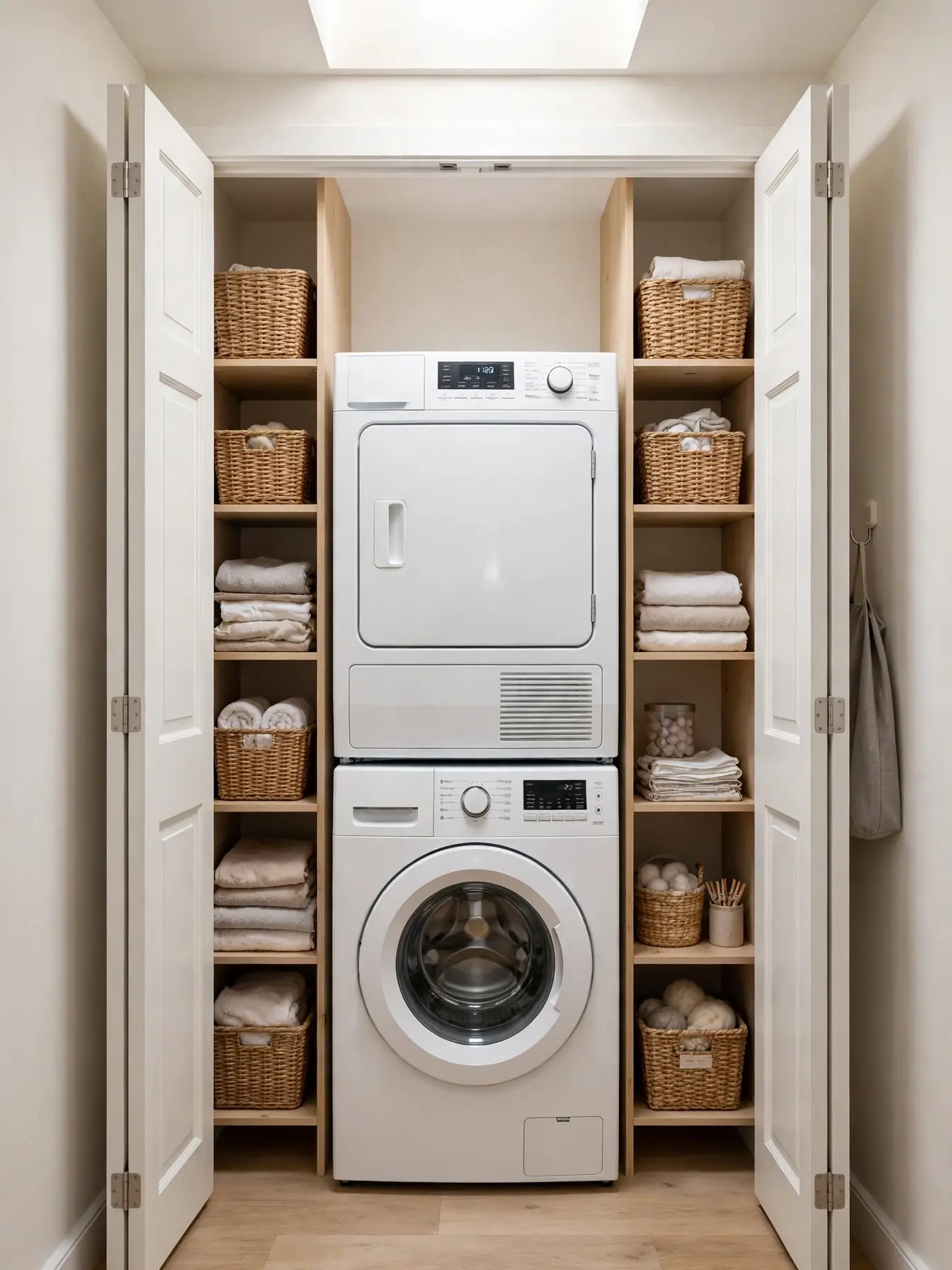
Stacking the dryer on the washer frees a full machine footprint for storage or a folding station. Most front-load pairs accept a stacking kit made for the model. Check the manuals first, since kits are brand specific.
Renters should ask the landlord before stacking, because the building may own the machines. If stacking is not an option, push the machines tight together. Treat the freed inches as cart space.
Best for: Front-load pairs in closets and nooks.
Try this: Confirm your exact models accept a stacking kit before buying one.
Hang A Tension Rod For Hang-Dry Clothes
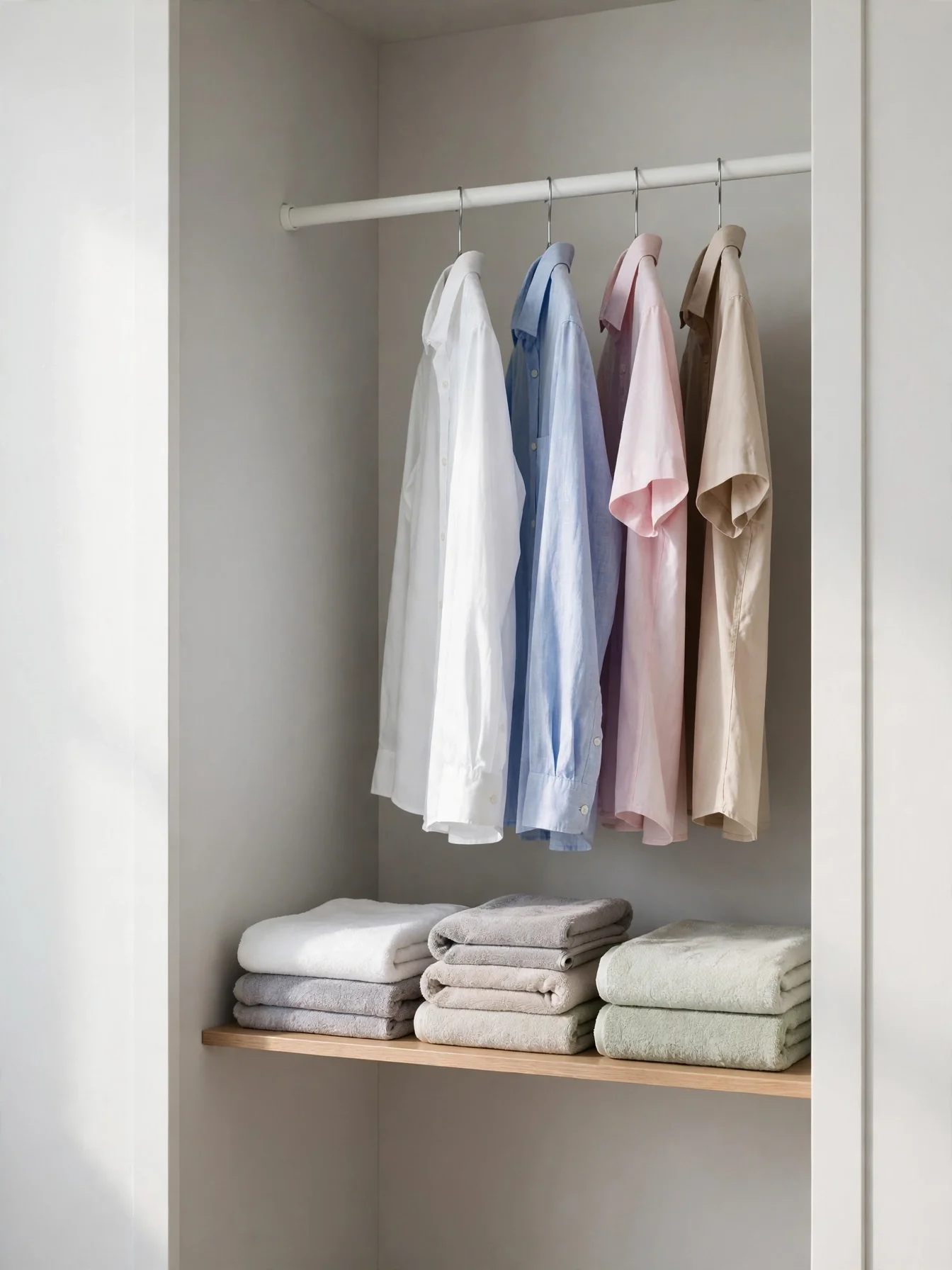
Delicates need air drying, and dryers shrink the rest. A tension rod wedged between two walls or inside a closet creates an instant hanging bar with zero holes. Hang shirts on hangers straight from the wash.
The rod holds a full load of light clothes when the tension is set right. Twist it tighter every few months, since rods loosen with use. For laundry room organization in small space renters, tension rods beat drills. For heavier items like jeans, split the load across two rods.
Best for: Renters and anyone who air-dries delicates.
Try this: Place a small towel on the floor under the rod to catch drips.
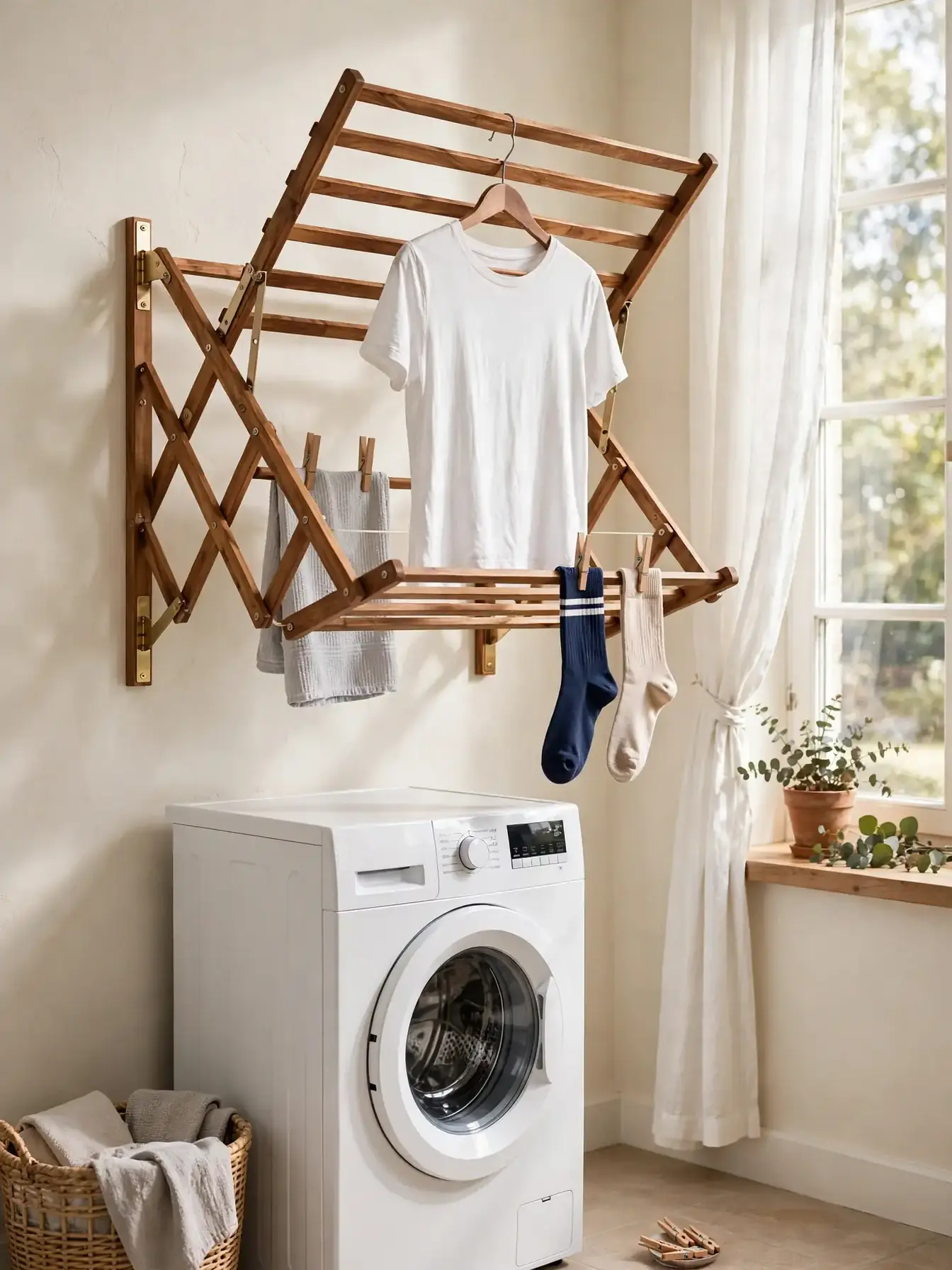
Mount An Accordion Drying Rack On The Wall
An accordion drying rack folds flat against the wall and pulls out to hold a full load. It beats a floor drying rack in a small room because it uses zero floor space. Mount it near the machines so wet clothes travel a short distance.
Choose a wood or metal rack with at least five bars for a real load. Renters can look for over-the-door versions that hook on without screws.
Best for: Small rooms where a floor rack would block the door.
Try this: Hang heavier items on the outer bars where the rack is strongest.
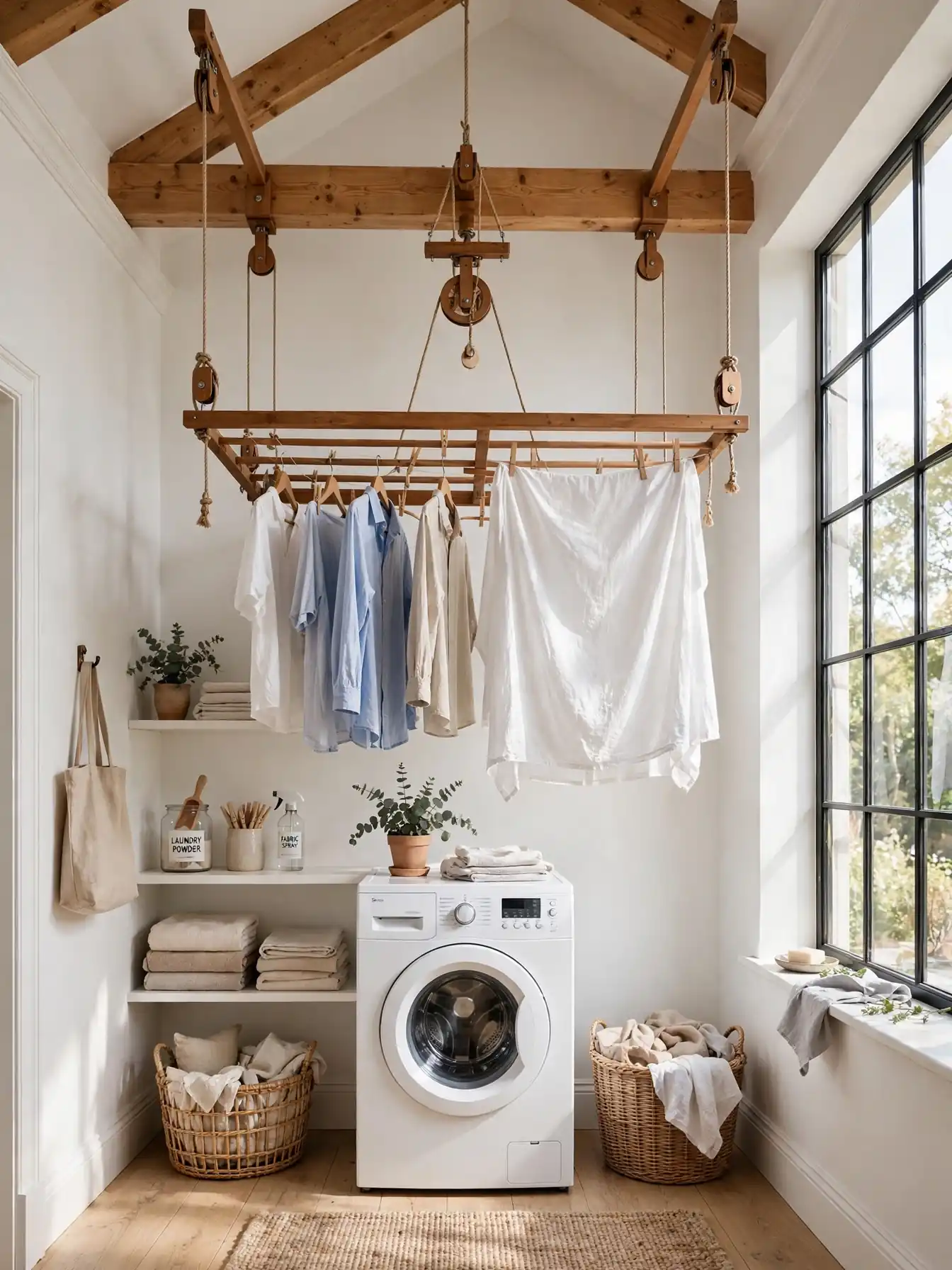
Lift Drying To The Ceiling With A Pulley Rack
Ceiling pulley racks lift wet laundry overhead, freeing every inch below. Lower the rack to hang clothes, then raise it toward the ceiling to dry. Warm air rises, so clothes dry faster up high.
This old European solution suits rooms with high ceilings and no wall space to spare. Check that the ceiling anchors hit solid wood or proper anchors. Skip this one in rentals unless the landlord approves the mounting.
Best for: High-ceiling laundry rooms with no free walls.
Try this: Hang the rack where rising warm air reaches it, away from vents.
Use The Back Of The Door For Pocket Storage
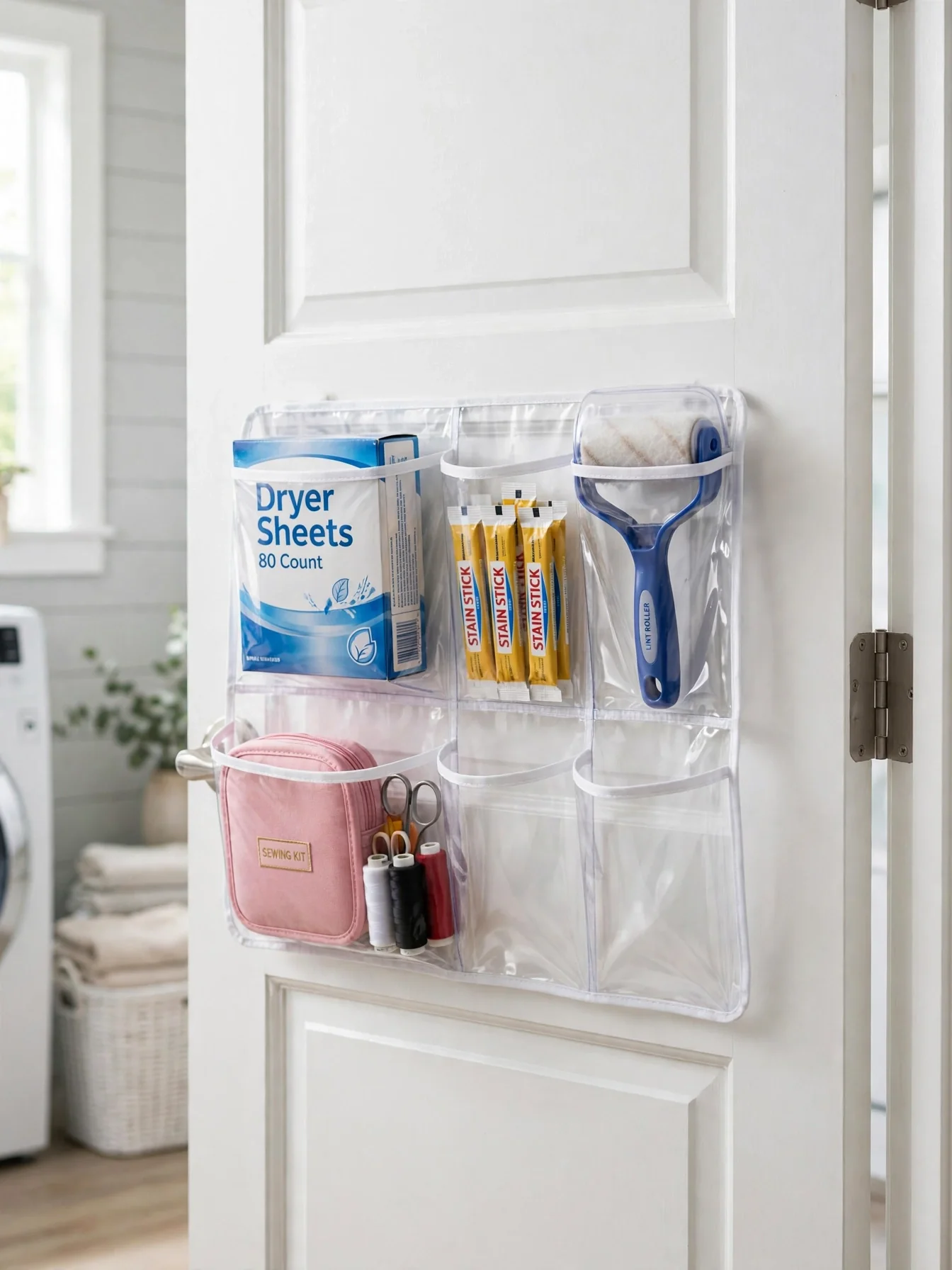
When laundry room organization in a small space is the goal, the door back counts as a wall. An over-the-door organizer with clear pockets holds dryer sheets, stain sticks, lint rollers, and sewing kits. Everything stays visible and off the shelves.
Choose a slim organizer so the door still closes fully. In a closet setup, hang it on the inside of the closet door or on the wall beside the machines.
Best for: Doors that swing into the laundry space.
Try this: Put the items you forget most in the top pockets at eye level.
Stick Magnetic Clips And Hooks On The Machines
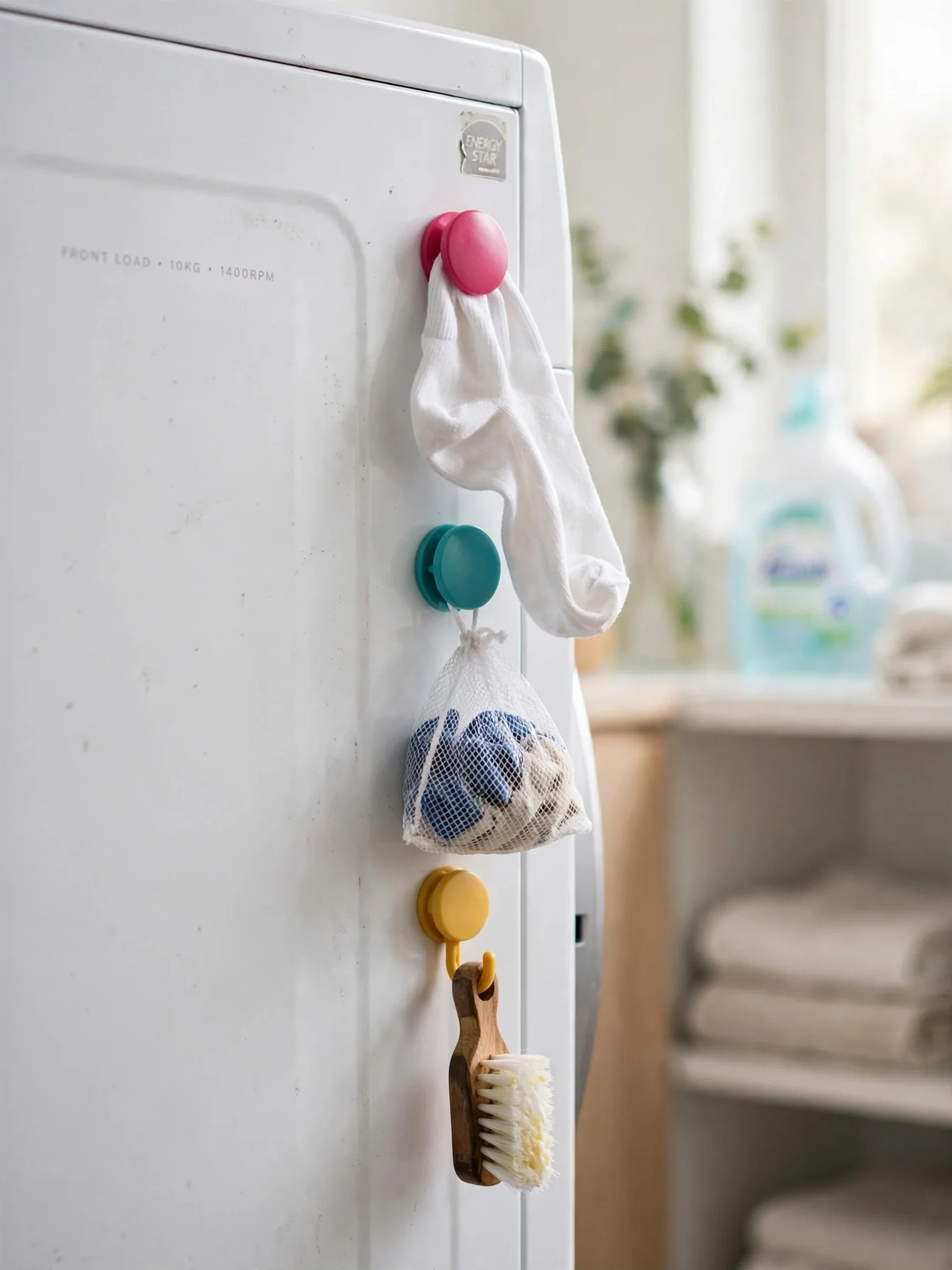
Washer and dryer bodies are steel, which makes them free magnetic real estate. Magnetic clips hold the lonely sock until its match appears. Magnetic hooks hang delicate bags and the stain brush within arm’s reach.
Strong magnets will not scratch the finish if you slide them instead of dragging them. This trick costs almost nothing and needs no installation at all.
Best for: Side-by-side machines with exposed metal sides.
Try this: Dedicate one clip as the permanent home for single socks.
Decant Detergent Into Matching Canisters
Bulky detergent jugs eat shelf space and clash with everything. Pour detergent into a slim dispenser and powder into a glass canister with a scoop. You reclaim inches, and the shelf looks calm. In laundry room organization, small space circles and decanting are step one.
Professional organizer Shira Gill advises the same move for small laundry zones. She told Livingetc that decanting saves space and streamlines the look. Keep the original labels or write the product name on the canister for safety.
Best for: Open shelves where supplies stay visible.
Try this: Choose canisters with pour spouts to avoid spills.

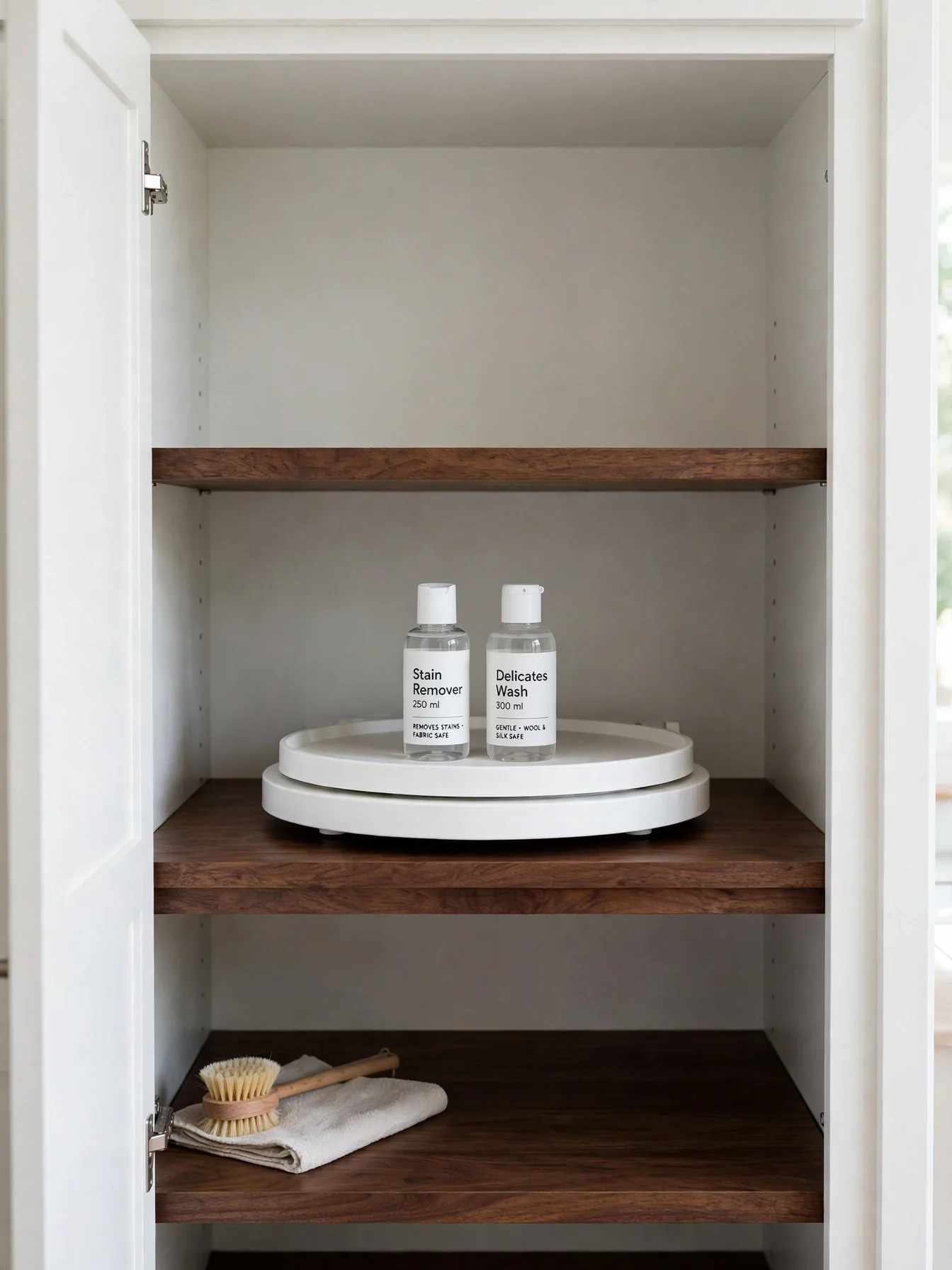
Spin A Turntable On Deep Shelves
Deep shelves swallow small bottles. A turntable, sometimes called a lazy Susan, brings the back row forward with one spin. Place one on each deep shelf and group stain removers on one and fabric care on another.
Choose a turntable with a raised rim so bottles do not slide off. Wipe it down monthly, since detergent drips collect underneath.
Best for: Deep cabinets where items vanish in the back.
Try this: Group one category per turntable so every spin finds something.
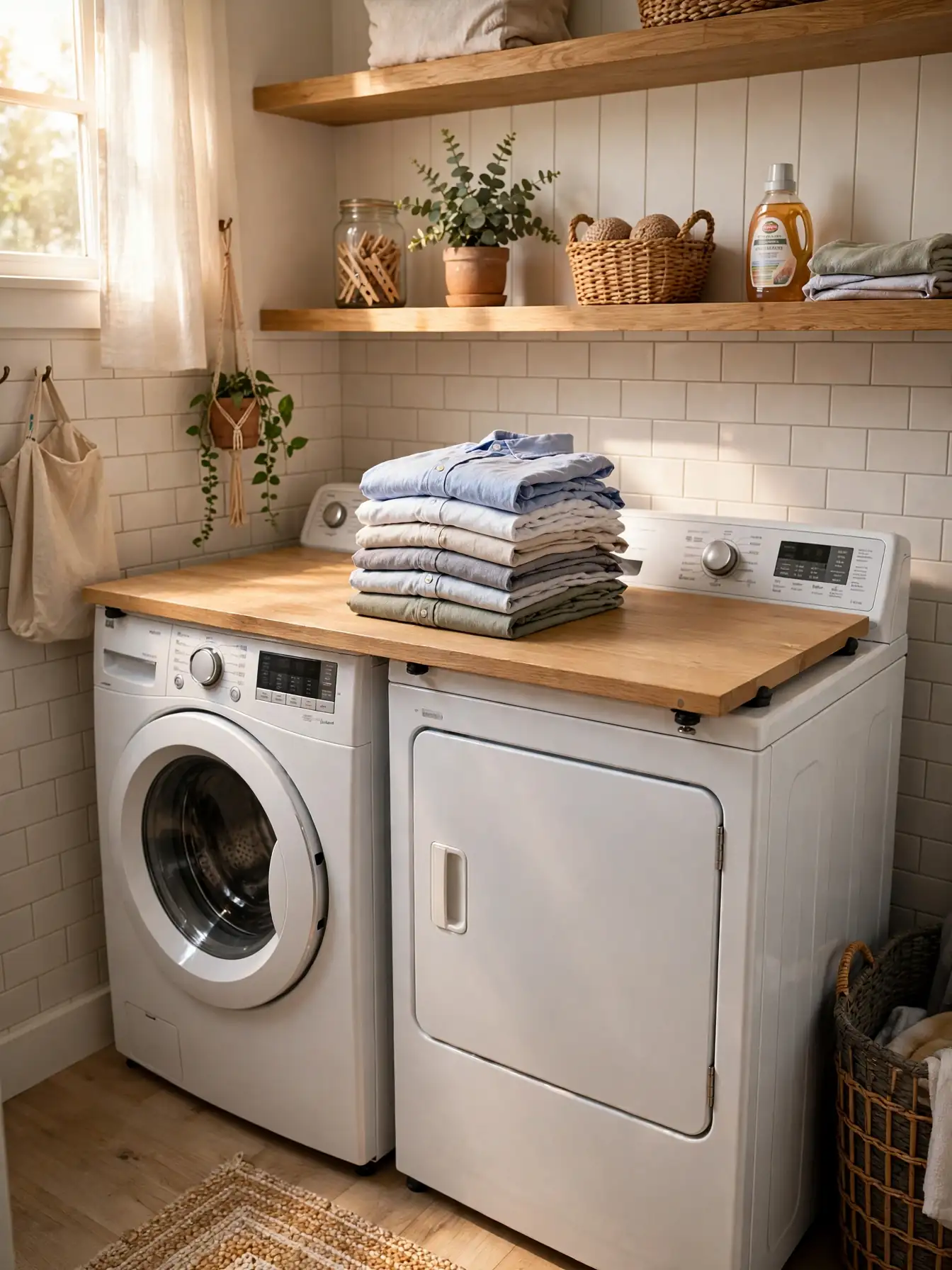
Lay A Board Over The Machines As A Folding Counter
A simple board laid across side-by-side machines creates an instant folding counter. It also stops bottles from vibrating off during the spin cycle. Use a finished wood board cut to span both machines with a small overhang.
Sand the edges smooth and seal the top against drips. Lift it off when you need full access to the machine tops. For laundry room organization on small space budgets, this is the cheapest folding surface going.
Best for: Side-by-side machines with no counter space.
Try this: Add small rubber feet under the board so it grips the machines.
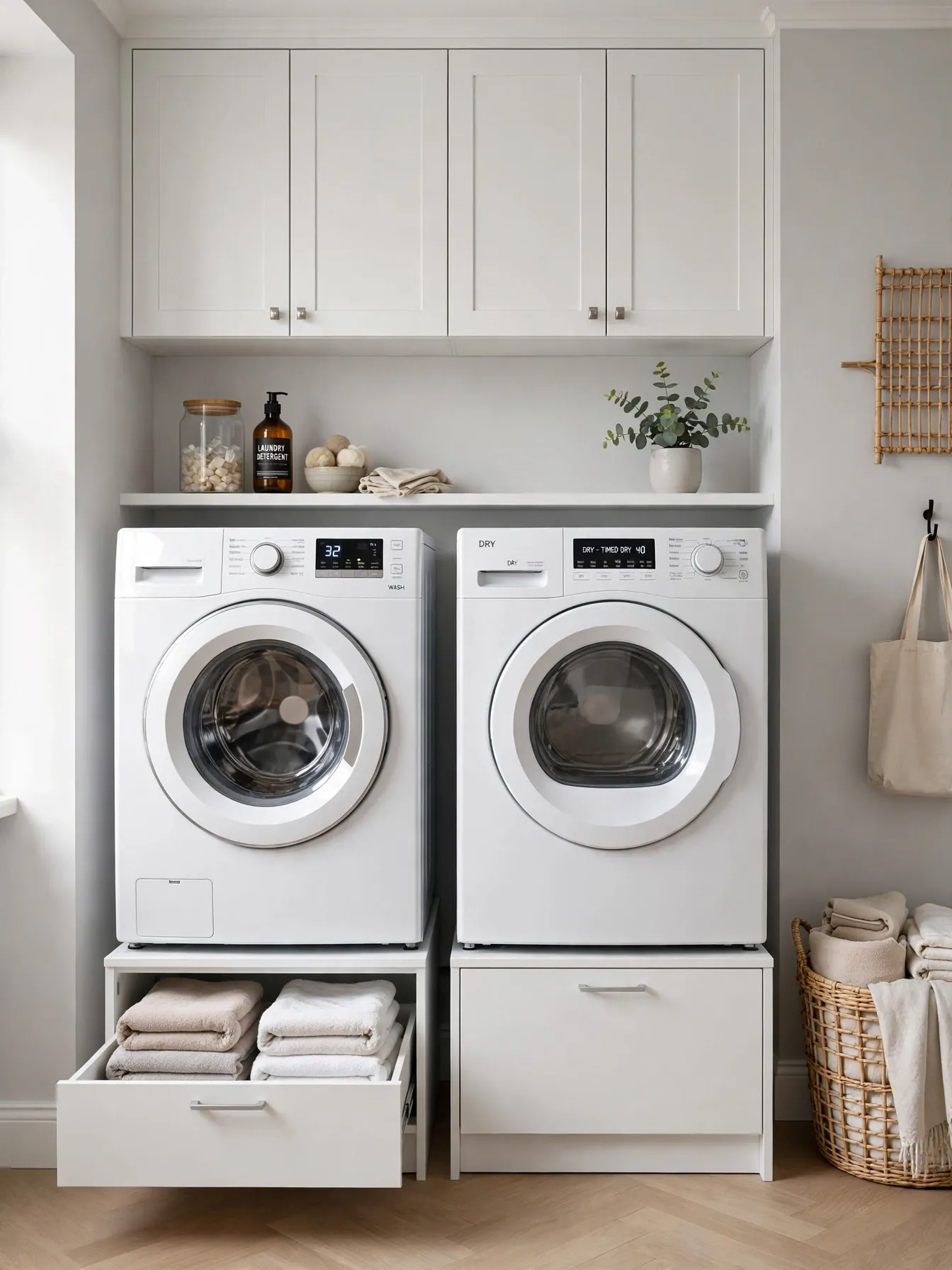
Slide Drawer Pedestals Under The Washer And Dryer
Pedestal drawers lift front-load machines by about a foot and add hidden storage underneath. Detergent bottles, dryer sheets, and folded rags fit inside. The raised height also saves your back, since you load the washer without bending as far.
Buy pedestals made for your exact machine models. They must match, since a wrong pedestal will not align with the feet. This upgrade costs more than most ideas here, so weigh it against a rolling cart first.
Best for: Front-load owners who want hidden bulk storage.
Try this: Measure your machine model numbers before ordering pedestals.
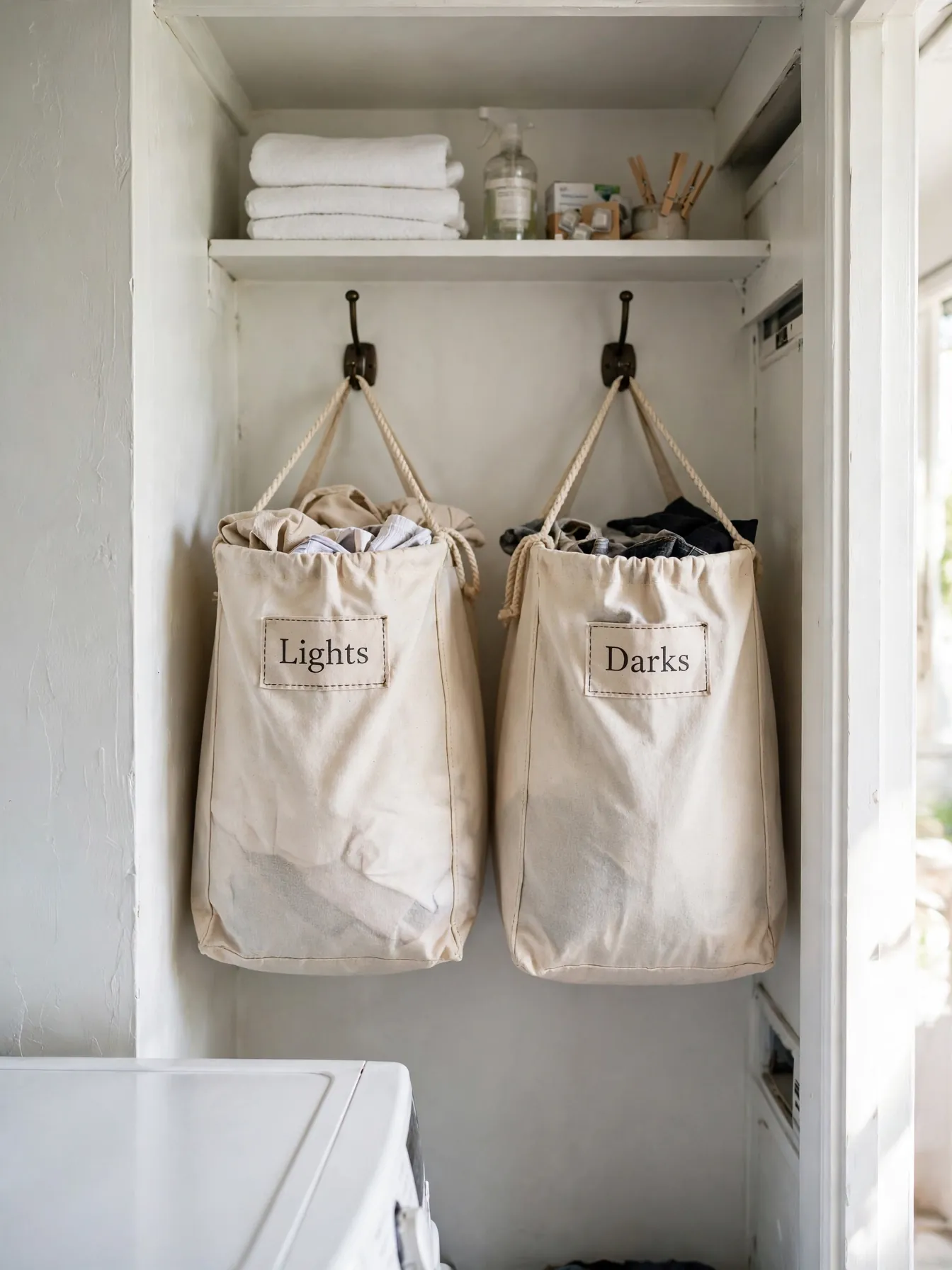
Sort With Two Bags Instead Of Three Bulky Bins
Three rigid sorting bins never fit a small laundry room. Two hanging bags do the same job in half the space. Hang one bag for lights and one for darks on hooks or a tension rod.
Wash delicates in a mesh bag tossed in with the right load. Empty the bags on laundry day and they fold flat. Look for bags with sturdy handles that survive weekly hauling. Pair the sort system with a wardrobe reset for small closets to cut total laundry volume at the source.
Best for: Closets too narrow for a row of bins.
Try this: Color-code the bags so the whole household sorts correctly.
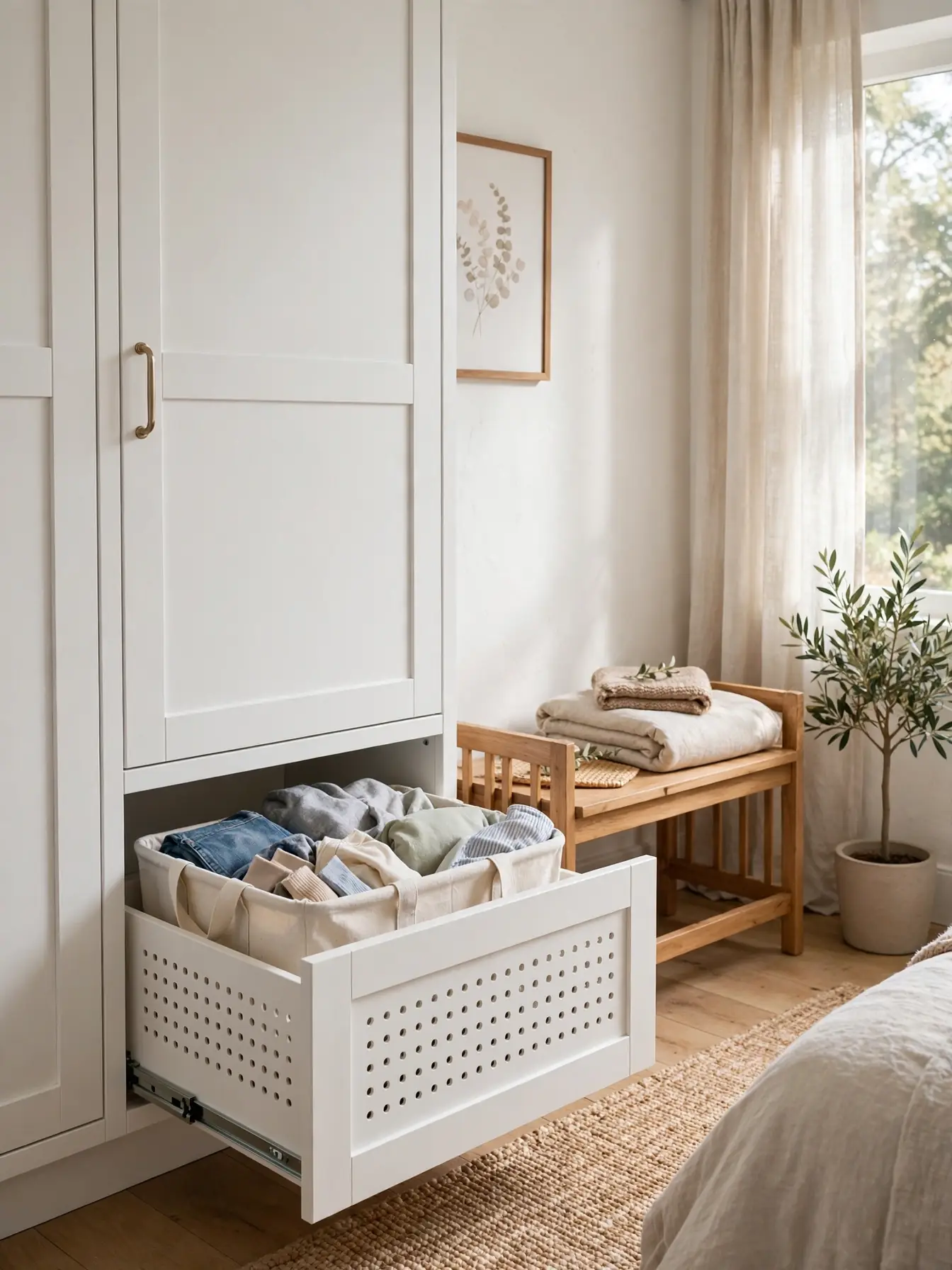
Hide The Hamper Inside A Cabinet Or Bench
A freestanding hamper eats floor space and always looks messy. A pull-out hamper inside a cabinet keeps dirty laundry hidden and ventilated. A storage bench with a lift top does the same job and adds a folding perch.
Choose ventilated designs so damp clothes do not turn musty. Empty the hamper on a schedule, since hidden hampers invite overflow.
If the laundry corner shares your bedroom, keep the room calm. See our guide to reading nooks for tiny apartments.
Best for: Laundry corners inside bedrooms or bathrooms.
Try this: Line the hamper with a washable bag for easy transfers.
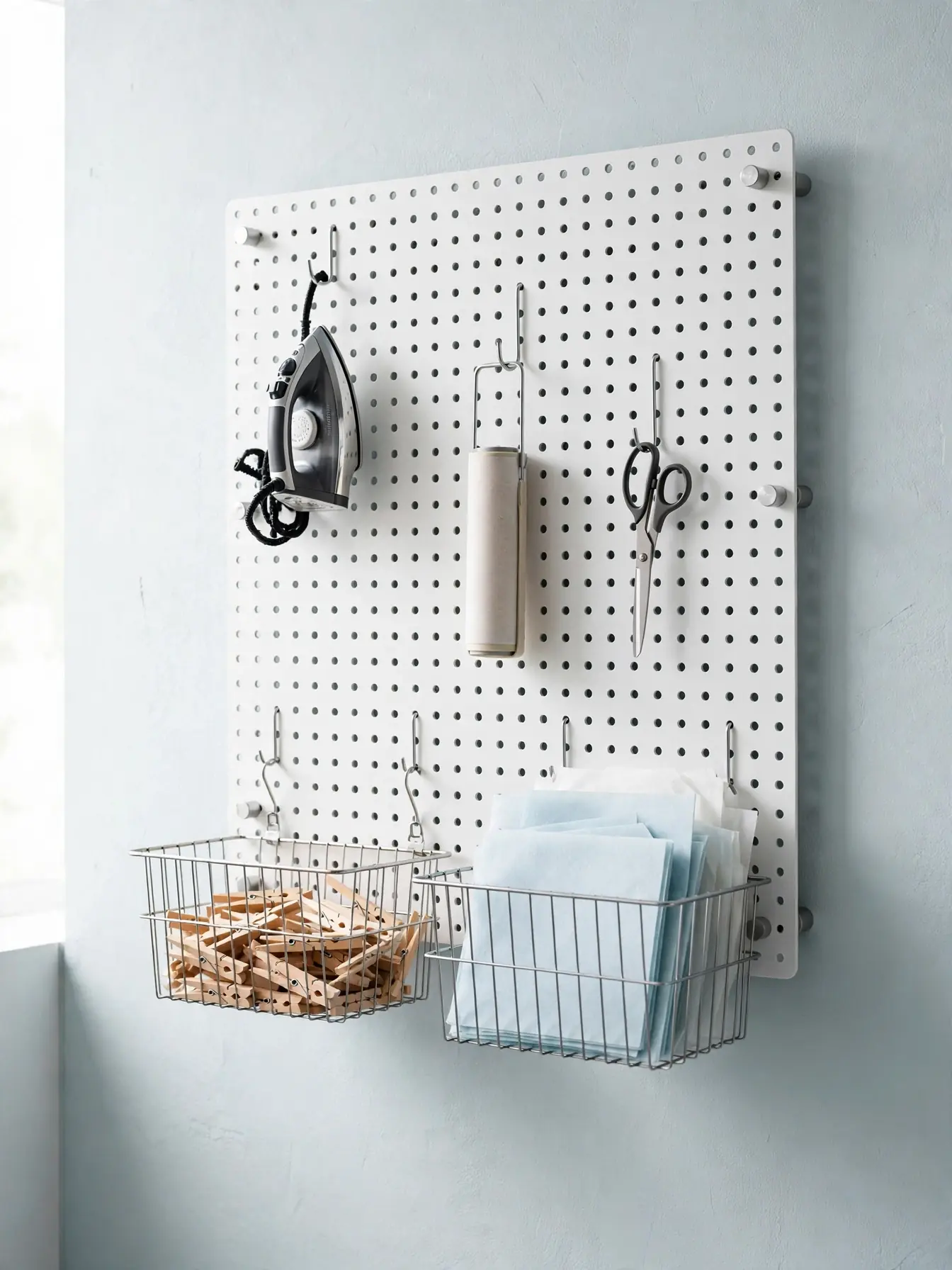
Pegboard The Side Wall For Hanging Tools
A pegboard turns a blank side wall into flexible hanging storage. Hooks hold the iron, the lint roller, scissors, and mesh bags. Small baskets clip on for clothespins and dryer sheets.
Rearrange the layout as your needs change, which fixed shelves never allow. Mount the board with spacers so hooks have room behind. Renters can use a freestanding pegboard panel leaned against the wall.
Best for: Blank side walls beside the machines.
Try this: Trace your tools on paper first to plan the hook layout.
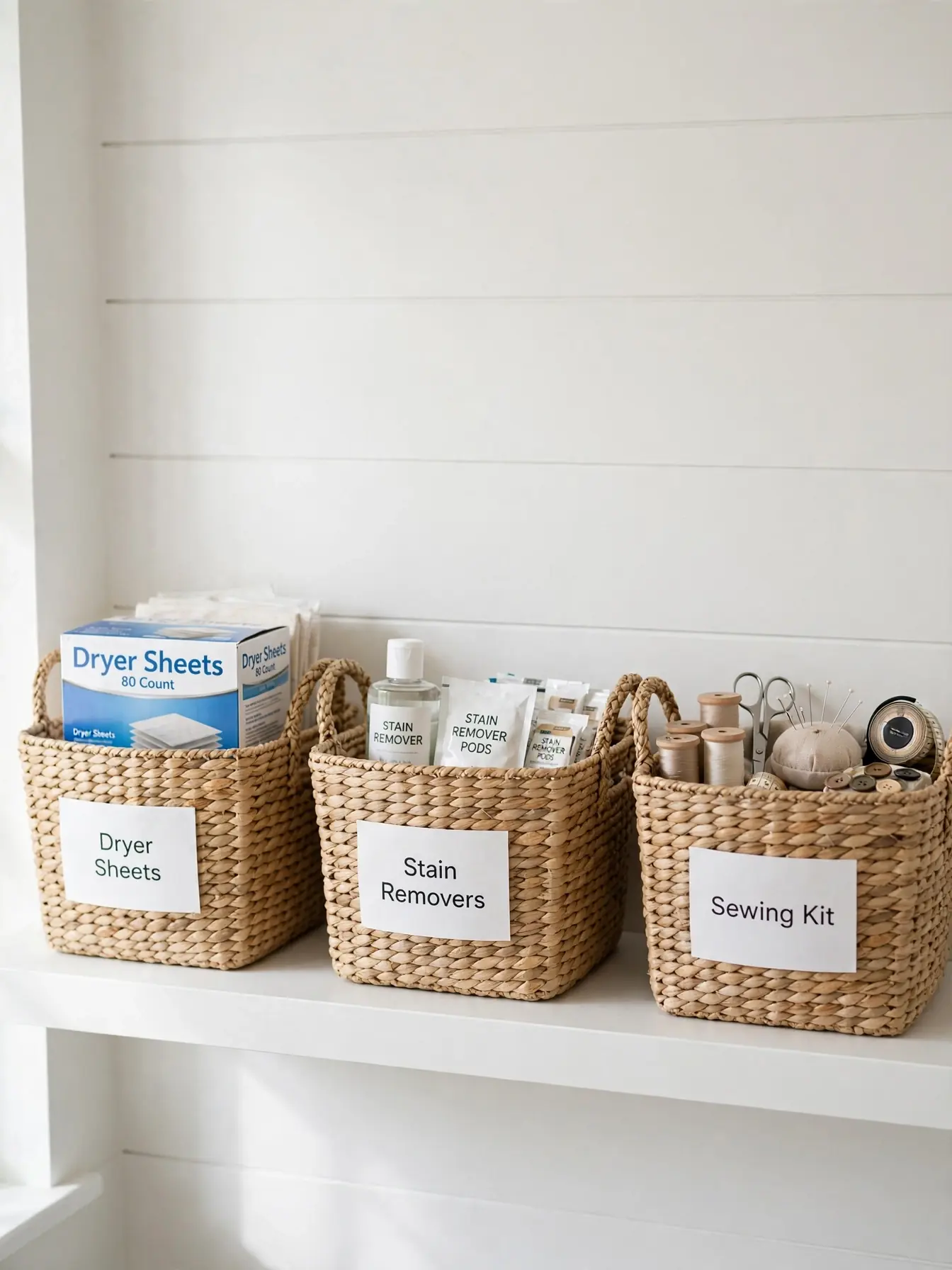
Corral Small Items In Labeled Baskets
Dryer sheets, stain sticks, and spare buttons scatter across every surface. One labeled basket per category ends the drift. Laundry room organization small space style favors matching baskets. Use baskets that match so the shelf reads as one calm unit instead of clutter.
A label maker keeps the system honest when the household shares the space. Review the baskets twice a year and evict anything that migrated in.
Best for: Open shelves where small items tend to scatter.
Try this: Limit each basket to one category so nothing drifts.
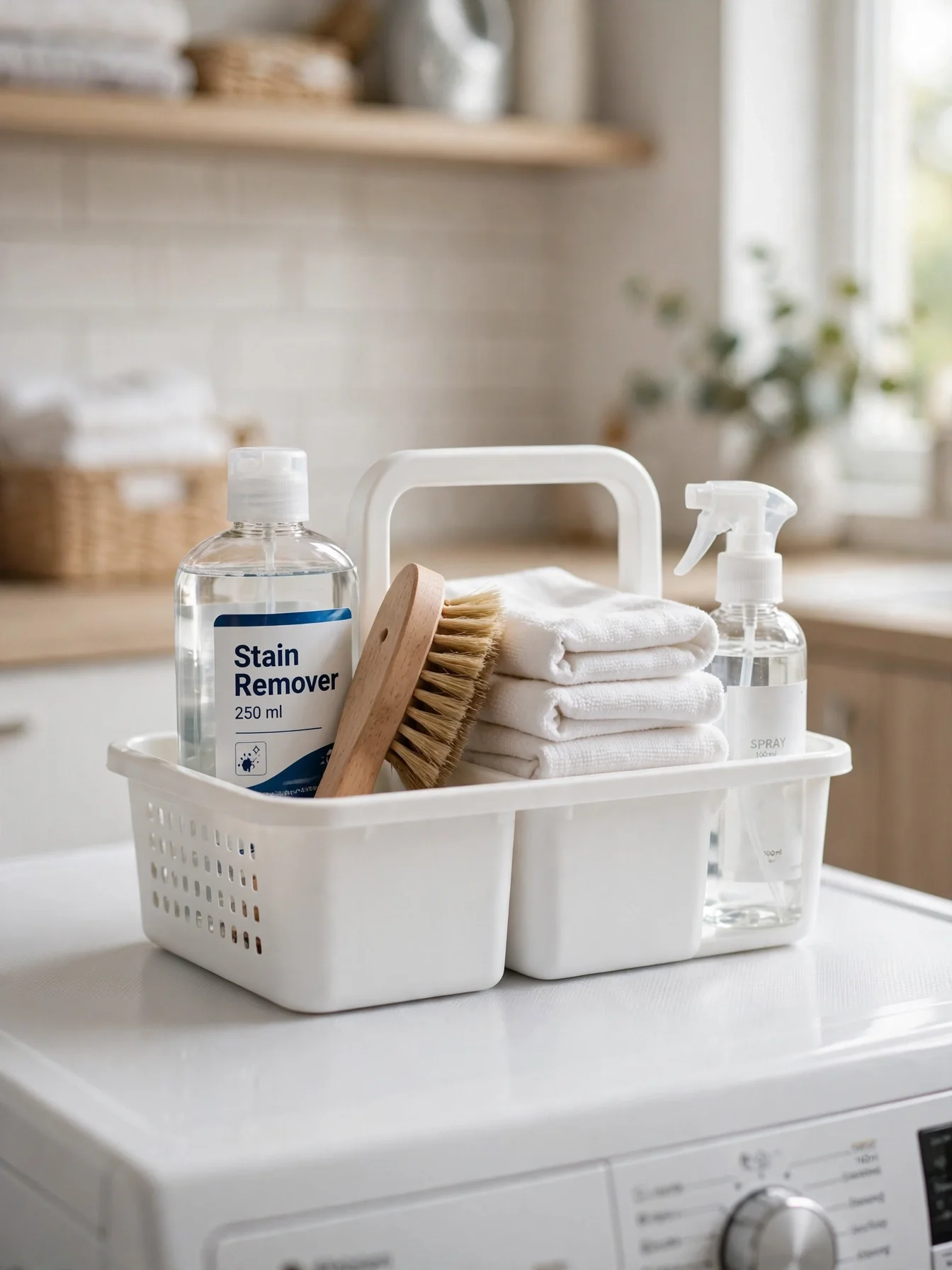
Set Up A Stain-Treatment Station
Stains set while you hunt for the remover. A small caddy with stain remover, a brush, white cloths, and a spray bottle lives next to the washer. Treat the spot the moment you find it, before the wash.
Keep the caddy stocked and the brush clean. This five-minute station saves clothes that a delayed treatment would ruin.
Best for: Households with kids or anyone who cooks a lot.
Try this: Treat stains before they dry, since heat sets most of them.
Tame Noise And Vibration With Anti-Vibration Pads
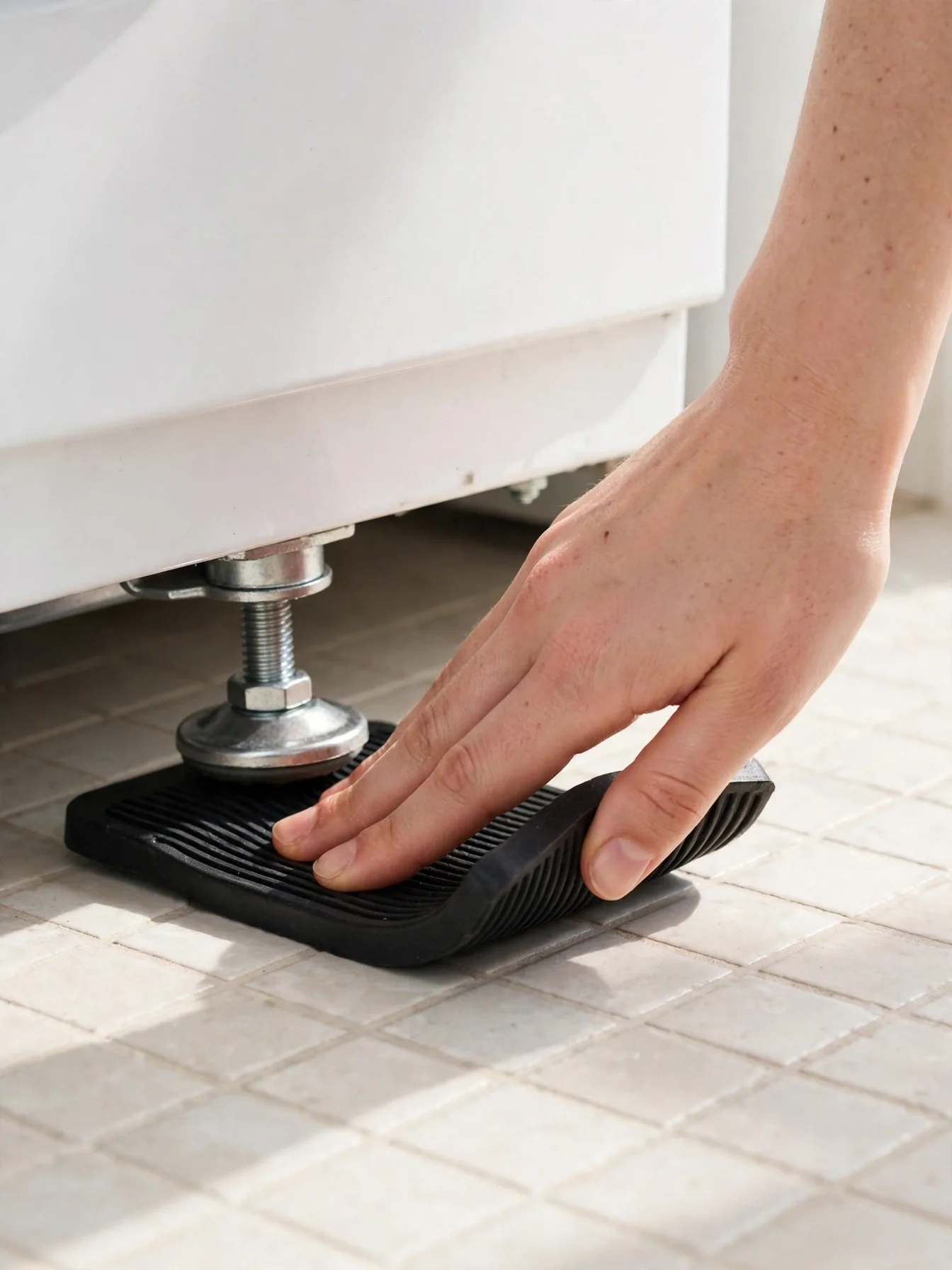
Laundry room organization small space upstairs means taming the spin cycle. Anti-vibration pads under each machine foot absorb much of that movement. They also keep the machines from walking across the floor.
Clear the machine tops before each load, since vibration sends bottles toward the edge. Your downstairs neighbors will notice the difference.
Best for: Second-floor or apartment laundry setups.
Try this: Check that the machines sit level, since tilt adds shake.
Ventilate And Deodorize The Laundry Closet
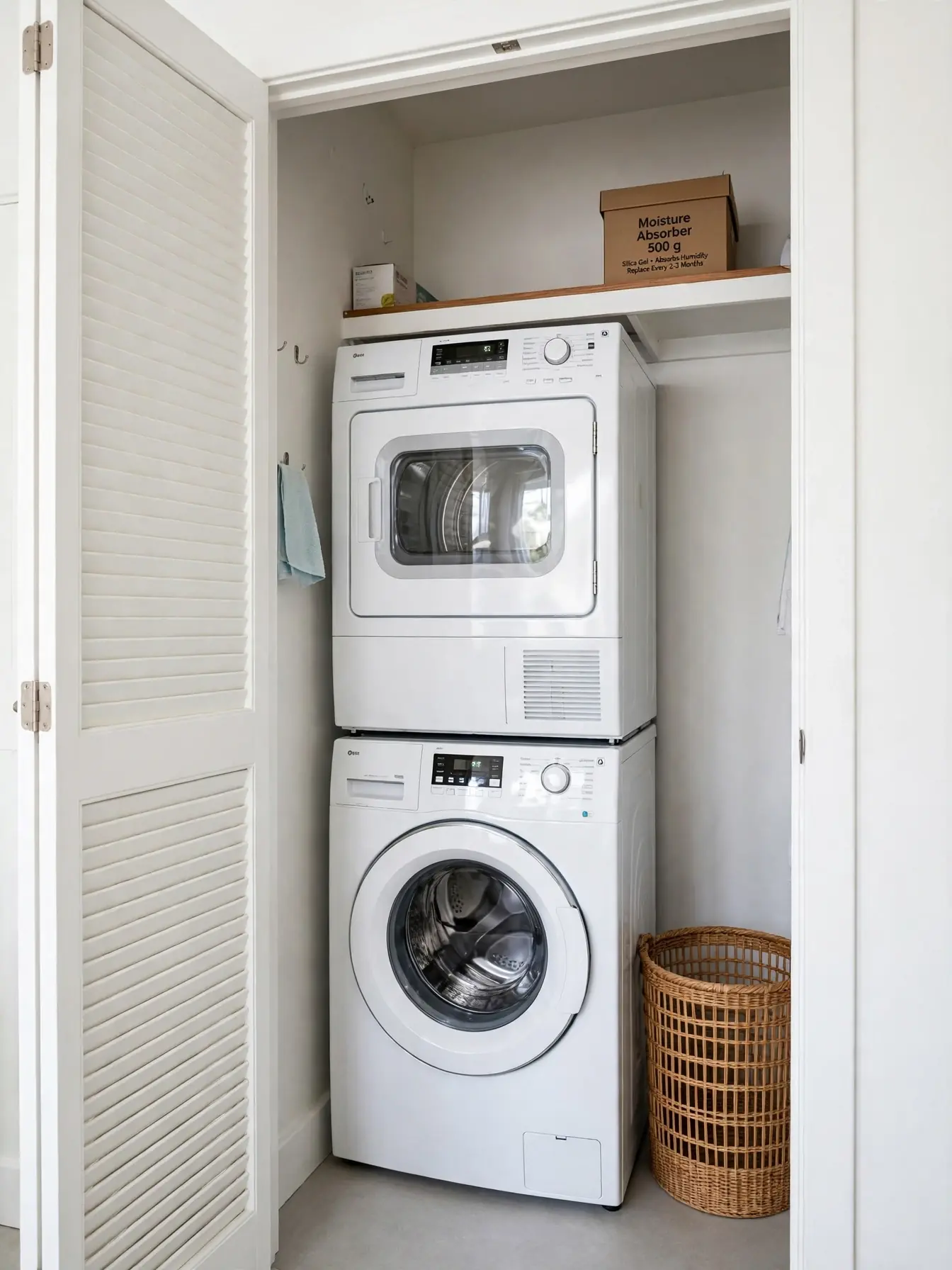
Closed laundry closets trap humidity and grow musty fast. Leave the closet door open after each wash so air circulates. A small moisture absorber on the shelf pulls dampness from the air.
Choose breathable hampers over sealed plastic bins for dirty clothes. Run the room fan or crack a nearby window when the dryer runs. Musty smells usually mean trapped air, not dirty laundry.
Best for: Enclosed closets and humid climates.
Try this: Wash the hamper liner monthly to stop odor at the source.
Build A Portable Kit For Shared Laundry Rooms
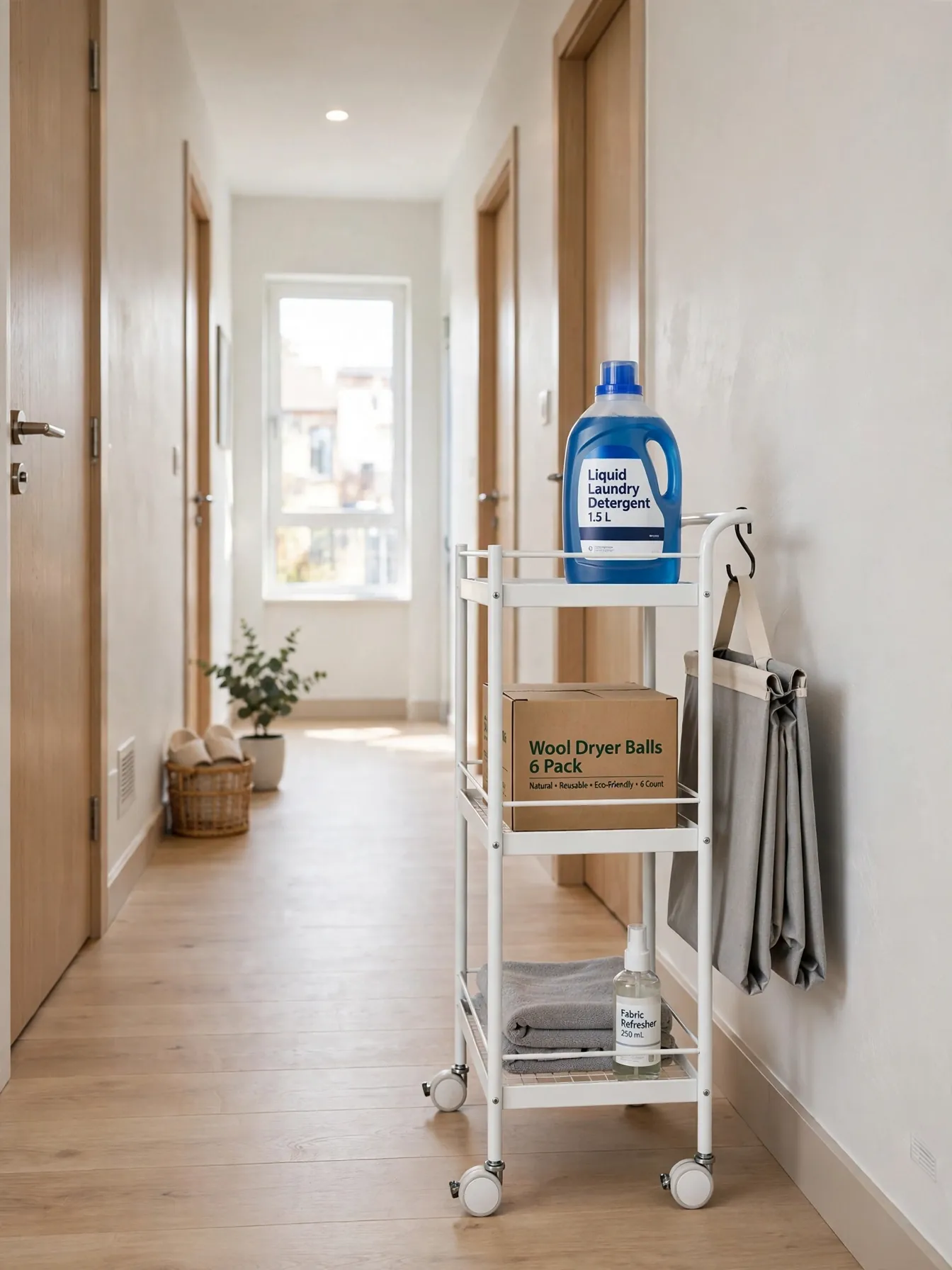
No in-unit machines? Shared laundry rooms need laundry room organization small space thinking too. A portable laundry kit brings order to the shared laundry room. Load a slim rolling cart with detergent, dryer balls, stain remover, and quarters or your payment card. Add a collapsible hamper for the trip downstairs.
Roll the cart to the machines, roll it back when the folding is done. The cart parks in a closet between laundry days.
Best for: Apartment buildings with shared laundry facilities.
Try this: Keep the cart packed so laundry day starts in minutes.
Match The Ideas To Your Laundry Setup
Not every idea fits every layout. Laundry room organization small space math is simple: walls plus doors plus gaps. A reach-in closet rewards the tension rod, the door-back organizer, and the two-bag sort system. Add floating shelves only where the walls feel solid.
A hallway nook has no walls to spare, so the slim rolling cart and the folding board matter most. The portable kit keeps supplies from colonizing the hallway. For more small-space organization guides as the series grows, browse the more organization guides.
A bathroom corner fights moisture, so prioritize ventilation and breathable hampers. Magnetic hooks keep tools off the damp floor.
A shared building laundry needs the portable kit first. Skip the mounted ideas, since the cart and collapsible hamper are the whole system.
Laundry Room Organization Small Space FAQs
How Do I Organize A Laundry Room With No Storage?
Start with the walls and the door. Add floating shelves above the machines, an over-the-door organizer for small items, and magnetic hooks on the machine bodies. These three moves create storage without taking any floor space.
Where Should Detergent Go In A Small Laundry Room?
Keep daily detergent on a lower shelf or a slim rolling cart beside the machines. Decant it into a slim dispenser to save inches. Store refills and bulk bottles on a higher shelf or in a nearby closet.
How Do I Dry Clothes Without A Dryer In A Small Apartment?
Use an accordion wall rack or a tension rod with hangers for daily loads. A ceiling pulley rack handles bigger loads overhead. Place racks near airflow and leave space between garments so air circulates.
Can Renters Organize A Laundry Room Without Drilling?
Yes. Tension rods, over-the-door organizers, magnetic hooks, slim rolling carts, and freestanding pegboard panels all install with zero holes. Adhesive hooks rated for the load handle lighter items on smooth walls.
What Is The Cheapest Way To Organize A Small Laundry Room?
Start free: declutter supplies and move bottles off the floor. Laundry room organization small space budgets stretch farthest on tension rods and magnetic hooks. Add those plus a board over the machines for a full system.
How Do I Stop My Laundry Closet From Smelling Musty?
Leave the door open after each wash and use breathable hampers for dirty clothes. Add a small moisture absorber on the shelf. Wash the hamper liner monthly, since trapped dampness causes most closet odor.
Final Thoughts
Laundry room organization small space success looks like this: every item has a home off the floor. Pick three ideas from this list this weekend: one for the walls, one for the gaps, and one for drying. Measure first, buy second, and edit your supplies before you store them. Your next load will feel easier. Start with the tape measure this weekend and build from there.